Dynamic Markets: How They Replace the DPS Under the Procurement Act
What dynamic markets are under the Procurement Act 2023, how they differ from a DPS and frameworks, how to join one and when existing DPS agreements end.
If you've won public sector work through a dynamic purchasing system, the name is changing and so are some of the rules. The Procurement Act 2023 replaced the DPS with the dynamic market, and the old systems now have a fixed end date. This guide explains what a dynamic market is, how it compares with what you know, and how to get on one.
What is a dynamic market?
The GOV.UK guidance on dynamic markets describes one as a list of qualified suppliers who can take part in future procurements. Buyers can split a market into parts, and you can only bid in the parts you've qualified for.
What makes it "dynamic" is that it has to stay open. Suppliers can apply to join at any point while the market runs, and the buyer has to consider each application within a reasonable period. Dynamic markets can be used for goods, services or works. The only exception is concession contracts, unless they're also utilities contracts.
The rules sit in sections 34 to 40 of the Act.
Dynamic market vs DPS vs framework
A dynamic market does a similar job to a DPS, but it's wider. A DPS could only be used for "commonly used purchases", while a dynamic market covers a much broader range of goods, services and works, as Capital Law notes.
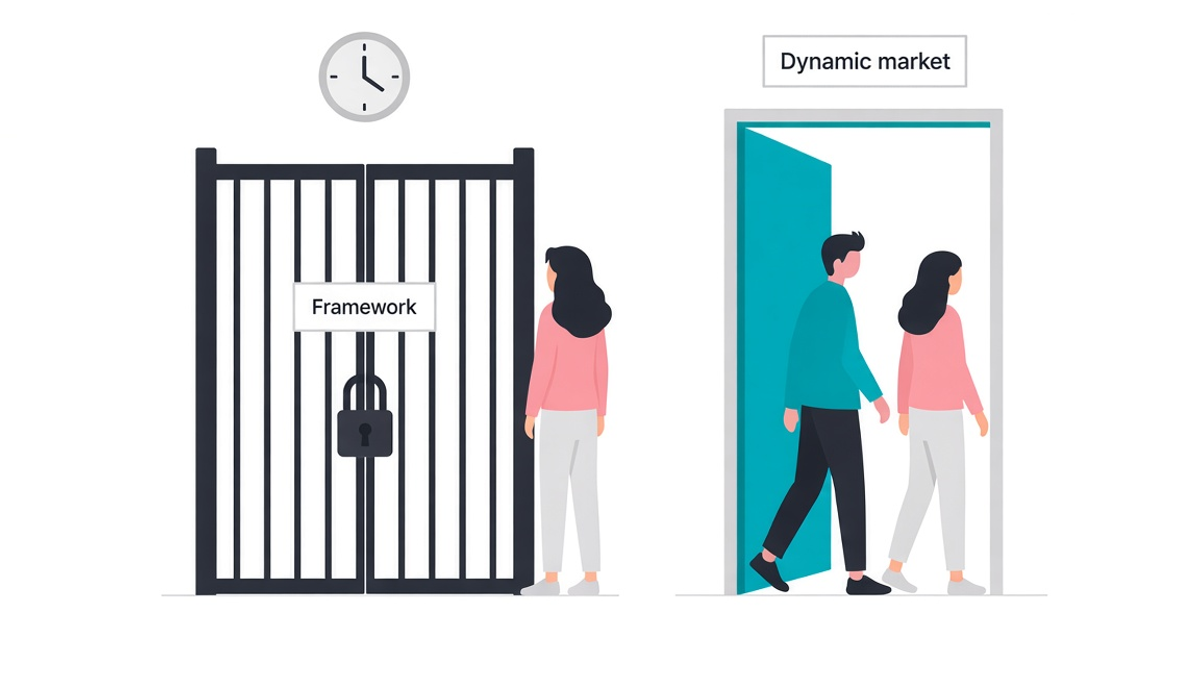
The bigger difference for most suppliers is the one with frameworks. A framework usually opens for applications at set points, and suppliers who miss the window wait for the next one. A dynamic market stays open for its whole life, so there's no single deadline to miss. The guidance also points out that joining a dynamic market isn't the award of a public contract, whereas a framework agreement is.
There's no limit on how many suppliers a dynamic market can hold, and the Act doesn't cap how long one can run.
What happens to existing DPS agreements?
DPS agreements set up under the old regulations carry on for now, but not indefinitely. Under the transitional rules, a DPS couldn't have its period of validity changed after 23 February 2026, and every remaining DPS will expire on 23 February 2029, whatever its original end date, as GOV.UK's FCDO guidance and Gowling WLG both confirm.
So for the next few years you'll see both. Buyers will keep using some DPS agreements while setting up dynamic markets alongside or in their place. If a DPS you rely on ends before 2029, check whether the buyer plans to replace it with a dynamic market and when it will open.
How to join a dynamic market
Buyers set conditions for membership, and section 36 of the Act says these must be a proportionate way of checking that members have the legal and financial capacity and the technical ability to deliver. The Act also limits what a buyer can ask for. For example, it can't:
- demand audited accounts from suppliers that aren't legally required to have them audited
- require contract insurance to be in place before a contract is awarded
- require you to have held a contract with a particular buyer
- insist on a specific qualification without accepting equivalents.
These conditions work much like the conditions of participation you'll meet in a standard tender, so the same evidence often does double duty. Buyers must also publish notices when they plan a dynamic market, when they set one up and when they change it, so keep an eye on Find a Tender for dynamic market notices in your sector.

Bidding for contracts under a dynamic market
Once a market is running, the buyer awards contracts through the competitive flexible procedure. The guidance is clear that neither the open procedure nor a direct award can be used to award a contract by reference to a dynamic market. Only members can be awarded a contract.
There is a useful safety net for suppliers who aren't on the market yet. If you send in a request to participate or a tender for a competition under a dynamic market, you can apply for membership at the same time, and the buyer has to consider your application before excluding you. The guidance allows one exception, where the procurement is so complex that there isn't enough time to consider the application before the deadline. So it's better to join early, but a late application isn't always fatal.
What this means for bid teams
Dynamic markets reward teams that keep their core evidence ready. Because applications are open all the time, you can join when it suits you, but you'll also face more competitors over the life of a market. Some practical steps:
- List the DPS agreements you're on and note when each one ends.
- Watch for dynamic market notices in your sectors and apply while you have time to do it properly.
- Keep your financial, technical and accreditation evidence current, so a membership application is a quick job.
- Keep your Central Digital Platform record up to date, because buyers will often ask for it alongside your application.
FAQs
Is a dynamic market the same as a DPS?
They do a similar job, but a dynamic market is a new tool under the Procurement Act 2023 and can be used for a wider range of purchases.
Can I join a dynamic market at any time?
Yes. Buyers must accept applications at any time during the market's life and consider them within a reasonable period.
When do existing DPS agreements end?
All DPS agreements set up under the old regulations expire on 23 February 2029 at the latest.
Can buyers charge suppliers fees?
The Act lets buyers set fees for dynamic markets in some circumstances. Check the market's notice and documents for details.
Find dynamic market opportunities
New dynamic markets are published as notices, so finding them early is half the job. BidSearch checks more than 900 sources for UK public sector opportunities, so you can spot the markets that matter to you and apply before the competitions start. Book a demo to see it in action.
The BidScript Team
The whole team!