Competitive Flexible Procedure: What Bid Teams Need to Know
What the competitive flexible procedure is under the Procurement Act 2023, how it differs from open tenders, and how to plan multi-stage bids.

Under the Procurement Act 2023, most above-threshold public contracts are awarded through one of two competitive routes: the open procedure, or the competitive flexible procedure. The second of those is new, and it is the one that is changing how a lot of multi-stage bids feel from the supplier side.
If your team used to recognise restricted procedures, competitive dialogue or competitive procedures with negotiation, those named routes have gone. What replaces them is a single flexible procedure that the buyer designs for the contract in front of them.
What is the competitive flexible procedure?
Section 20 of the Act defines a competitive tendering procedure as either an open procedure, or "such other competitive tendering procedure as the contracting authority considers appropriate". That second option is the competitive flexible procedure (CFP).
In plain terms, it is any multi-stage competitive process the buyer designs, as long as it stays proportionate to the nature, complexity and cost of the contract, and follows the Act's rules on notices, time limits, equal treatment and transparency.
GOV.UK guidance on competitive tendering procedures is clear that buyers can build in shortlisting, negotiation, dialogue, site visits, demonstrations and presentations. They can also refine award criteria during the process under section 24, within the limits set out in the tender notice.
Open procedure vs competitive flexible procedure
The open procedure is still a single-stage tender. Anyone who wants to can submit a bid, and the buyer awards on the basis of those tenders.
A competitive flexible procedure is multi-staged. Under section 20(4), the buyer can limit how many suppliers take part, or how many progress to later rounds. That is why CFPs are mandatory when the buyer wants to shortlist before inviting tenders, when awarding under a dynamic market, or when reserving a contract to supported employment providers or public service mutuals.
For bid teams, the practical difference is planning. An open tender is one writing window. A CFP can ask for a request to participate, then an initial tender, then negotiation or dialogue, then a final tender. Each stage has its own deadline, and the people you need for dialogue are not always the same people who write the quality answers.
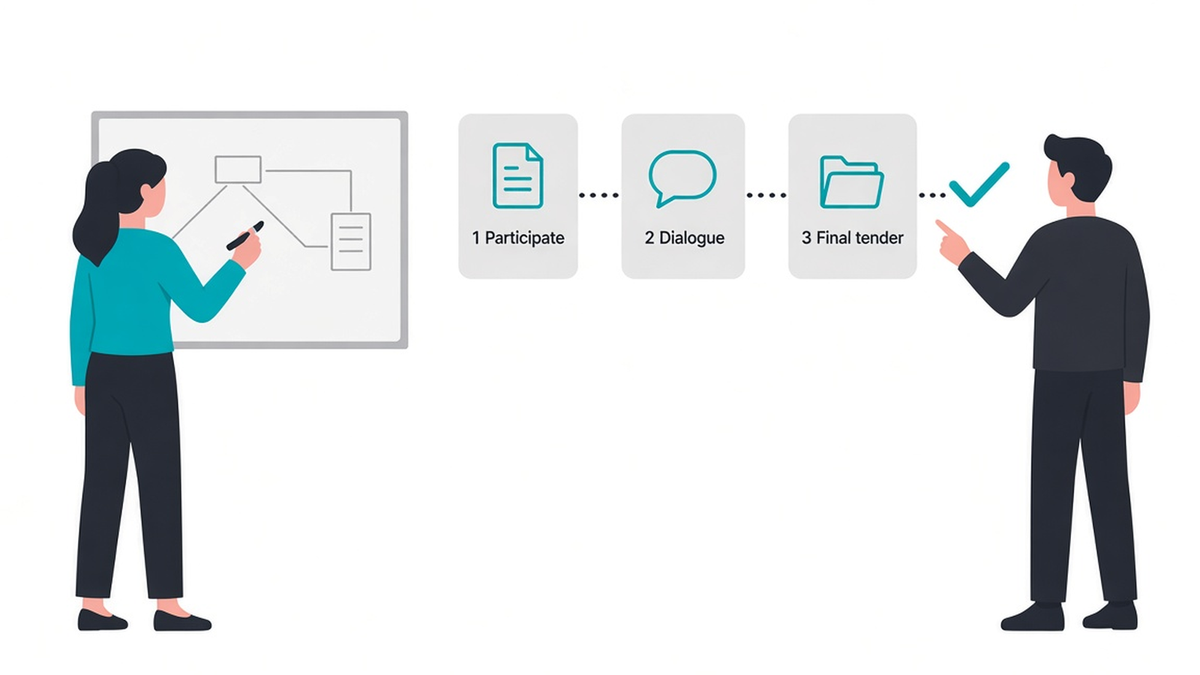
How a CFP can be structured
The guidance does not force buyers into one template. It does give useful examples:
- A simple two-stage process that looks a lot like the old restricted procedure: conditions of participation first, then invitations to tender for the shortlisted suppliers, with no negotiation.
- A multi-stage process with limited negotiation after initial tenders, then final tenders.
- A longer process for complex or less-defined requirements, with dialogue to shape the requirement, possible refinement of award criteria, and sometimes site visits or demonstrations.
- A process with no separate participation stage, where all interested suppliers submit an initial tender and the field is narrowed later.
None of those is compulsory. The only rule that matters for your planning is what the tender notice actually says.
What to look for in the tender notice
For a CFP, the tender notice has to do more work than an open notice. Alongside the usual award criteria, conditions of participation and submission details, regulation 19 and the competitive tendering guidance expect the notice to set out:
- Whether the notice is inviting requests to participate, or inviting a first (or only) tender
- How the procedure will run, including whether negotiation may happen at any stage
- Whether award criteria may be refined during the procedure
- The criteria used if the buyer intends to limit the number of suppliers
- Any intended minimum number of suppliers
Read that section before you commit resource. A CFP that invites requests to participate is a different job from one that asks for a full tender on day one. And if negotiation is reserved rather than guaranteed, you need to know what triggers it.
Conditions of participation still sit separately from award criteria. They test whether a supplier has the legal, financial and technical capacity to perform the contract. Our guide to conditions of participation covers that distinction. In a CFP they can also be used to create the shortlist.
Negotiation and dialogue
The Act does not define negotiation in detail. Cabinet Office's short guide on the competitive flexible procedure and negotiation treats negotiation as structured discussion aimed at improving price, quality or contractual terms.
A few points matter for suppliers:
- When negotiation will happen, and what can be negotiated, should be set out in the tender notice or associated documents.
- Equal treatment still applies. Buyers should give participating suppliers the same opportunity to negotiate, even if the subjects discussed differ because of the specifics of each proposal.
- Buyers must not use one supplier's proposals to inform negotiations with another.
- Negotiation can sit after initial tenders, or after a preferred supplier has been identified. A preferred supplier stage must not change the award outcome.
Dialogue is broader: discussion about any aspect of the procurement. Site visits, demonstrations and presentations can also appear in a CFP, and they have to be assessed objectively against the published award criteria.

What this means for bid teams
Treat every CFP as a programme, not a single document deadline.
Map the stages as soon as the notice lands. Who owns the participation response? Who joins negotiation? Who rewrites the final tender after dialogue? Put those names against the dates before you say yes.
Qualify harder. A multi-stage process costs more to run than an open tender, and a weak opportunity that looked manageable as one submission can eat a month of senior time once negotiation starts. Your bid/no-bid framework should include capacity for dialogue, not just writing.
Keep your evidence ready between stages. Initial tenders, intermediate assessments and final tenders often draw on the same case studies and certificates. If those live in one place, you are not rebuilding the same pack every fortnight. That is the job our knowledge engine is built for.
Watch for refinement of award criteria. Section 24 allows buyers to add detail or adjust weightings within published ranges. It does not allow brand-new criteria. If the criteria change mid-process, check the notice and associated documents before you rewrite.
FAQs
Is the competitive flexible procedure the same as competitive dialogue?
No. Competitive dialogue as a named procedure has gone. A buyer can design a CFP that includes dialogue, but they have to set that out in the tender notice and stay within the Act.
Can a buyer shortlist in an open procedure?
No. Limiting the number of participating suppliers is a competitive flexible procedure feature under section 20(4)(a).
Do I get feedback if I drop out before the final stage?
Assessment summaries are only required for assessed tenders at the final stage. Guidance still expects buyers to tell suppliers promptly if they are not progressing, and recommends using a similar feedback structure for intermediate rounds.
Does a CFP always include negotiation?
No. Some CFPs are just a participation stage followed by tenders. Negotiation only happens if the notice says it may.
Find the right CFP opportunities earlier
The earlier you see a multi-stage procurement coming, the easier it is to staff it properly. BidSearch monitors 900+ procurement sources and can surface pipeline, preliminary market engagement and tender notices before the writing window closes in on you.
The BidScript Team
The whole team!