What Is Bid Management? A Complete Guide for 2026
Bid management is how organisations win competitive work on purpose, not by luck. A complete guide to the lifecycle, the key roles, and how to win more bids.
Bid management is the structured process of finding, qualifying, and winning competitive contracts — and for many organisations it is the single biggest driver of new revenue. The global proposal and bid management software market was worth an estimated USD 2.1–3.8 billion in 2025 and is growing at 14–18% a year, a sign of how seriously teams now treat this work. This guide explains what bid management is, the lifecycle it follows, who is involved, and how the right tools help you win more.
What Is Bid Management?
Bid management is the end-to-end process of identifying tender opportunities, deciding which to pursue, and coordinating the people, content, and deadlines needed to produce a winning response. It turns a one-off scramble into a repeatable system.
Done well, it brings three things together: process, people, and content. A clear sequence of stages, the right contributors working to a plan, and a library of approved, reusable answers. When any one is missing, quality and win rates suffer.
The Bid Management Lifecycle
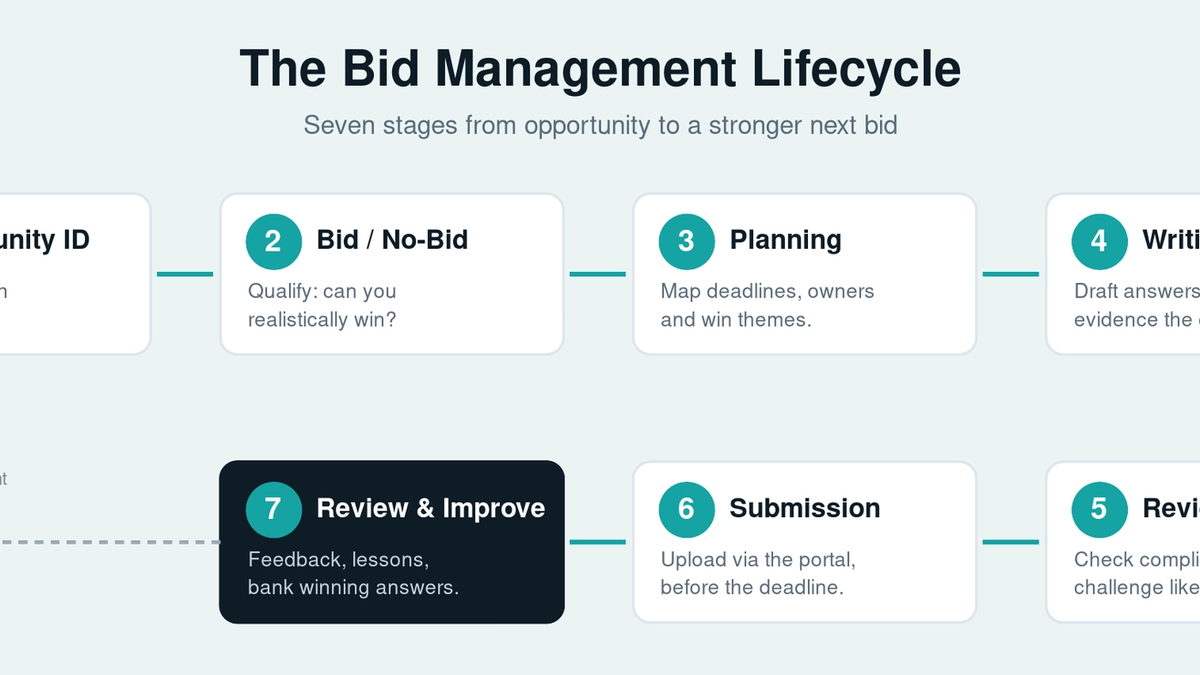
Most structured bidding operations follow the same seven stages:
- Opportunity identification — Spot tenders worth pursuing, ideally early.
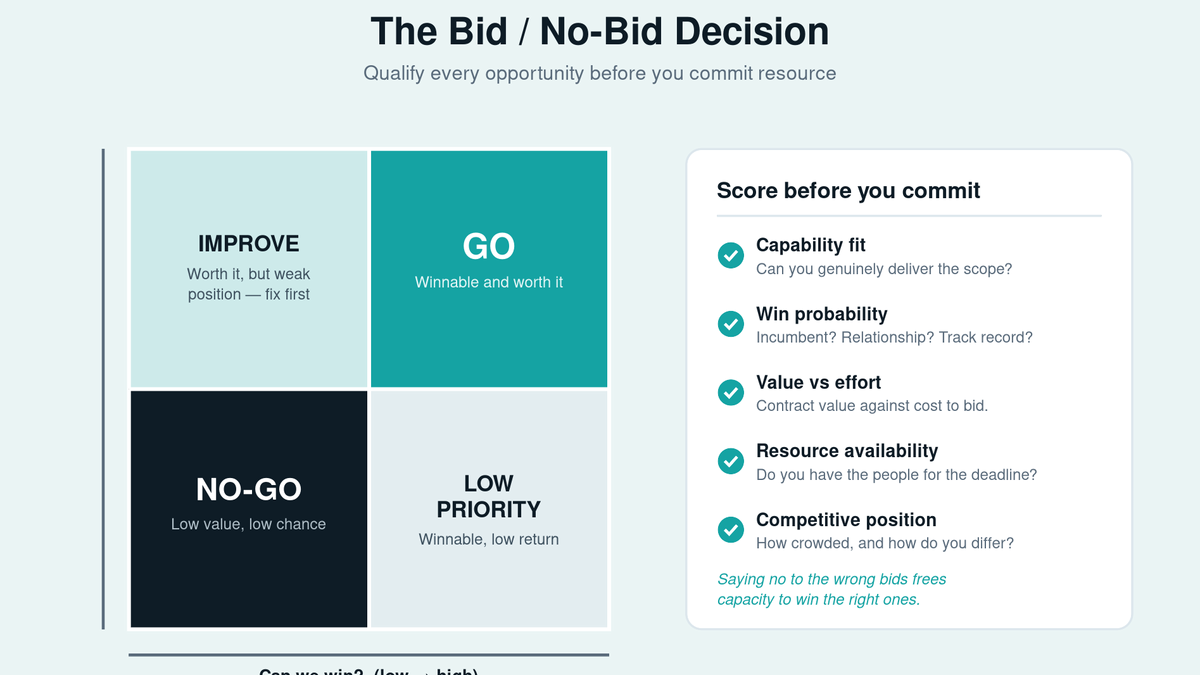
- Bid/no-bid qualification — Decide whether you can realistically win and whether it is worth the resource.
- Bid planning — Map deadlines, contributors, win themes, and sign-off dates.
- Writing — Draft answers that address the question and evidence the claims.
- Review — Check compliance and challenge the response like an evaluator.
- Submission — Upload through the buyer’s portal before the deadline.
- Review and improve — Seek feedback, capture lessons, and bank winning answers.
The highest-leverage step is qualification: saying no to the wrong bids frees capacity to win the right ones.
Who Runs the Bid? Key Roles
A bid manager owns the process end to end — qualification, planning, coordinating contributors, and ensuring a compliant, on-time submission. A bid writer turns technical input into clear, persuasive answers. Subject-matter experts supply the detail; reviewers and approvers provide quality and sign-off.

Bid Management vs Proposal and Tender Management
These terms overlap. The difference is context, not substance:
- Tender management — formal, structured procurements, especially UK public sector contracts under the Procurement Act 2023.
- Proposal management — common for private-sector and RFP-driven work.
- Bid management — the umbrella term covering the full lifecycle across both.
How Bid Management Software Helps
As bid volume grows, spreadsheets and email stop scaling. A full-lifecycle platform brings process, people, and content into one place.
BidScript is full-lifecycle bid management software. It unifies your content, past submissions, outcomes, and tender documents into one real-time knowledge system, while AI Agents handle research, drafting, and compliance — so teams assemble and tailor responses instead of starting from scratch.
Teams using BidScript report up to 6× faster proposal creation and a +35% average win-rate uplift.
► See structured bid management in practice — book a BidScript demo.
Frequently Asked Questions
What is bid management?
Bid management is the end-to-end process of finding tender opportunities, qualifying which to pursue, and coordinating the people, content, and deadlines needed to produce a winning, compliant response. It spans the full lifecycle from opportunity identification through to post-bid review and improvement.
What does a bid manager do?
A bid manager owns the bid process. They qualify opportunities, plan the response, coordinate writers and subject-matter experts, manage deadlines and internal sign-offs, and ensure the final submission is compliant and on time. They coordinate the bid rather than necessarily writing all of it.
What is the difference between bid management and proposal management?
They describe the same discipline. "Tender management" usually means formal public sector procurements, "proposal management" is common for private-sector RFPs, and "bid management" is the umbrella term. The core process — qualify, plan, write, review, submit, improve — is identical across all three.
Do I need bid management software?
If you respond to a few simple bids, organised templates may be enough. As volume, complexity, and contributor numbers grow, software helps by centralising reusable content, managing version control and deadlines, and giving pipeline visibility — cutting both time per bid and compliance risk.
Bid Management: The Foundation for Winning More
Strong bid management is the operating system for how your organisation wins competitive work. Qualify the right opportunities, build a library of proven content, and review like an evaluator, and you lift both win rate and efficiency.
► Book a BidScript demo to see how your team can win more, faster.
Read Next
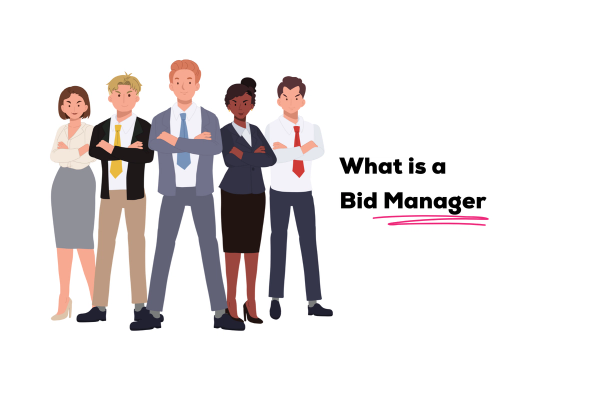
What Is a Bid Manager? Role, Skills and Day-to-Day
A bid manager does far more than submit tenders on time. They lead strategy, align teams, shape win themes, and ensure every bid meets the buyer’s needs. Learn what a bid manager really does, why the role is evolving, and how the right tools can help you win more bids.
What Is a Bid Writer? Role, Skills & Salary Guide (2026)
A bid writer turns your company's capabilities into persuasive, compliant tender responses that win contracts. Here's what the role involves, the skills it takes, and what it pays in the UK.
Knowledge Management for Bid Teams: A 9-Pillar Playbook
Everyone talks about efficiency, "single source of truth," and "content libraries," but when it comes down to it, most organisations are sitting on a mess of outdated PDFs, broken SharePoint folders, and half-written boilerplates scattered across desktops.
What a Bid Management Platform Should Actually Do (And How to Choose One)
While most platforms focus on helping you write faster, BidScript is built to help you think, work — and win — smarter.